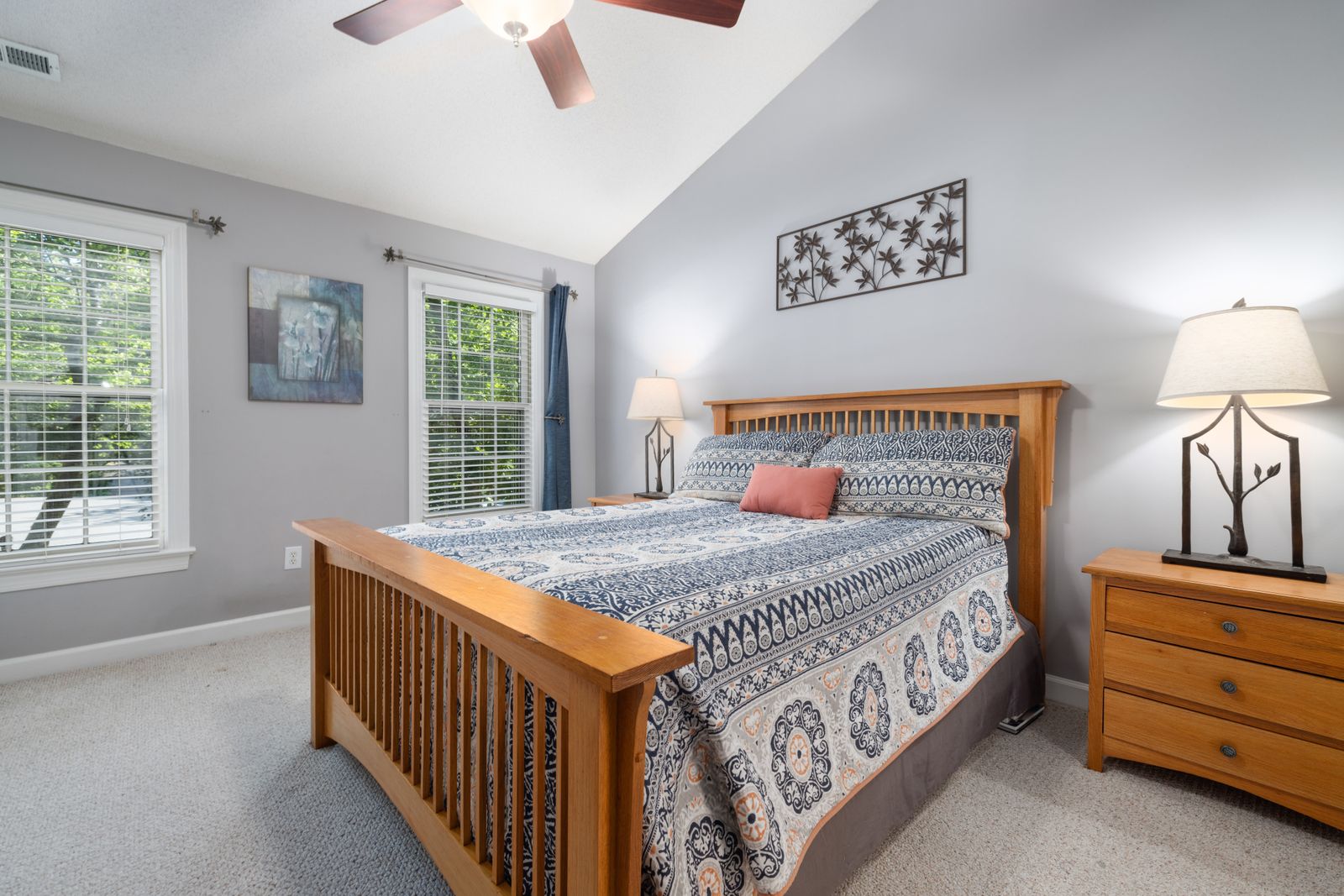
The most common insurance gap we see in Benton County is not exotic. It is a good house, a decent tenant, a reasonable rent check — and a homeowners policy still sitting on a property that is no longer a home to the person who owns it.
Nobody did anything wrong on purpose. It happens because the switch from residence to rental is a life event, not a paperwork event. You move, the closing does not happen, you find a tenant instead, and the policy in the drawer keeps renewing exactly as it always has.
That policy is now describing a house that does not exist.
The accidental landlord
Here is the version we hear most often around here.
You bought in Bentonville a few years ago. Work moved you across town, or your family outgrew the place, or the numbers on selling did not look as good as the numbers on keeping it. So you rented it out. Maybe to a coworker’s cousin. Maybe to a family relocating in for a job at one of the big employers, of which there is no shortage.
Nobody called their agent, because in your head nothing changed. You still own the house. The mortgage is still yours.
But the policy changed meaning the day the tenant’s furniture came in. A homeowners policy is issued on the representation that the named insured lives there. Occupancy is a fundamental underwriting fact, not a detail. When a carrier investigates a claim on a rented property that is insured as an owner-occupied residence, the ground for denial is already there — and it is the total loss, not the small one, where anyone bothers to look closely.
The fix is a phone call. The failure to make it is the expensive part.
What the numbers say about renting here
Benton County’s owner-occupied housing unit rate is 67.0%. Inside Bentonville it drops to 50.4%. That difference is the whole story: roughly a third of county households and about half of Bentonville households are living in a place somebody else owns.
The rent supporting all of that is real money. Median gross rent across Benton County is $1,277 a month, and in Bentonville it is $1,344. Multiply either by twelve and you are looking at an income stream that most owners have quietly built into their household budget.
That income stream is an insurable asset. Most landlords never insure it.
What a rental property policy actually is
Rental property is written on a dwelling fire form rather than a homeowners form. Same idea, different assumptions. It is built around a structure the owner does not live in, and it drops the pieces that only make sense for an occupant while adding the pieces that only make sense for a landlord.
Coverage on the building
The structure gets insured for its rebuild cost, the same construction-estimate logic as any house — lumber, labor, and code at the time of loss, not purchase price or market value.
Ask for replacement cost rather than actual cash value on the dwelling. Actual cash value depreciates the building, and on an older rental the depreciation can be brutal. Roofs in particular are frequently written on an actual cash value basis for wind and hail, which is worth knowing before a spring storm rather than after.
You can also insure the appliances, window coverings, and lawn equipment you keep at the property. That is landlord-owned personal property, and it has its own small limit.
Landlord liability
This is not the same exposure as your personal liability at home, and it is not covered by your homeowners policy for a property you rent out.
As a landlord you can be held responsible for injuries arising out of the condition of the premises. A stair tread gives way. A handrail was loose. A tenant’s guest falls on ice on a walkway you were responsible for maintaining. A dog the lease should not have allowed bites a neighbor.
Landlord liability pays damages you are legally obligated to pay and, just as important, pays to defend you. Defense costs are substantial even when the claim ultimately fails.
If you own more than one rental, or you own them in an LLC, say so. The named insured needs to match the entity that actually holds title, and mismatches there create real problems at claim time.
Loss of rents
This is the coverage that separates a landlord policy from a homeowners policy more than anything else, and it is the one owners are most grateful for.
If a covered loss makes the property uninhabitable, loss of rents — sometimes shown as fair rental value — replaces the rental income for the period it reasonably takes to repair.
Think about the sequence. A kitchen fire in March. The tenant has to move out, and under most leases their obligation to pay rent stops when the unit is unlivable. Repairs take four months because every contractor in Benton County is booked. Your mortgage payment, your property taxes, and your insurance premium all continue for those four months with nothing coming in.
At Bentonville’s median rent, four months is over $5,000 of income that simply does not arrive. Loss of rents is what stands in that gap.
What is not covered: the tenant’s belongings
Your policy insures your building and your liability. It does not insure a single thing your tenant owns.
Tell them that plainly, and require renters insurance in the lease. It protects them, and it protects you — because a tenant whose possessions were destroyed and who has no coverage of their own is a tenant looking for someone to hold responsible. Requiring a stated minimum liability limit and asking to be listed as an interested party is standard practice and costs you nothing.
The questions underwriting will ask
Have these ready and the whole thing goes faster.
- How long is the lease? Annual leases underwrite differently than month-to-month, and both differ from short-term or nightly rentals. If you are running a property as a short-term rental, that is a materially different risk and it must be disclosed. Do not assume a standard landlord policy contemplates it.
- Is it currently occupied? A vacant property between tenants is its own problem. Standard forms restrict or exclude coverage after a property has sat vacant for a stated number of days. If your rental is going to sit empty during a renovation, call before the vacancy clock runs, not after.
- How old are the roof, wiring, plumbing, and HVAC? These drive both eligibility and price.
- Who holds title? You personally, jointly, or an entity.
- Do you have other rentals? Multiple properties can often be handled more cleanly together.
Before your next lease renewal
Three things, and none of them take long.
First, confirm in writing that the policy on each rental is actually written as a rental. Look at the form name on the declarations page, not at what you remember buying.
Second, check whether loss of rents is on there and what the limit is. Compare it against what the property actually rents for now, not what it rented for when you bought it.
Third, make sure the lease requires renters insurance and that you have a current certificate for every tenant.
Come talk it through
Whether you own one house you never quite got around to selling or a handful of doors across Bentonville, Rogers, Bella Vista, and Centerton, it is worth twenty minutes to make sure the coverage matches what the property is actually doing.
Bring your current declarations page and a copy of a lease to the Bentonville office, or call (479) 855-6107. If everything already lines up, we will tell you that and you can get on with your day.